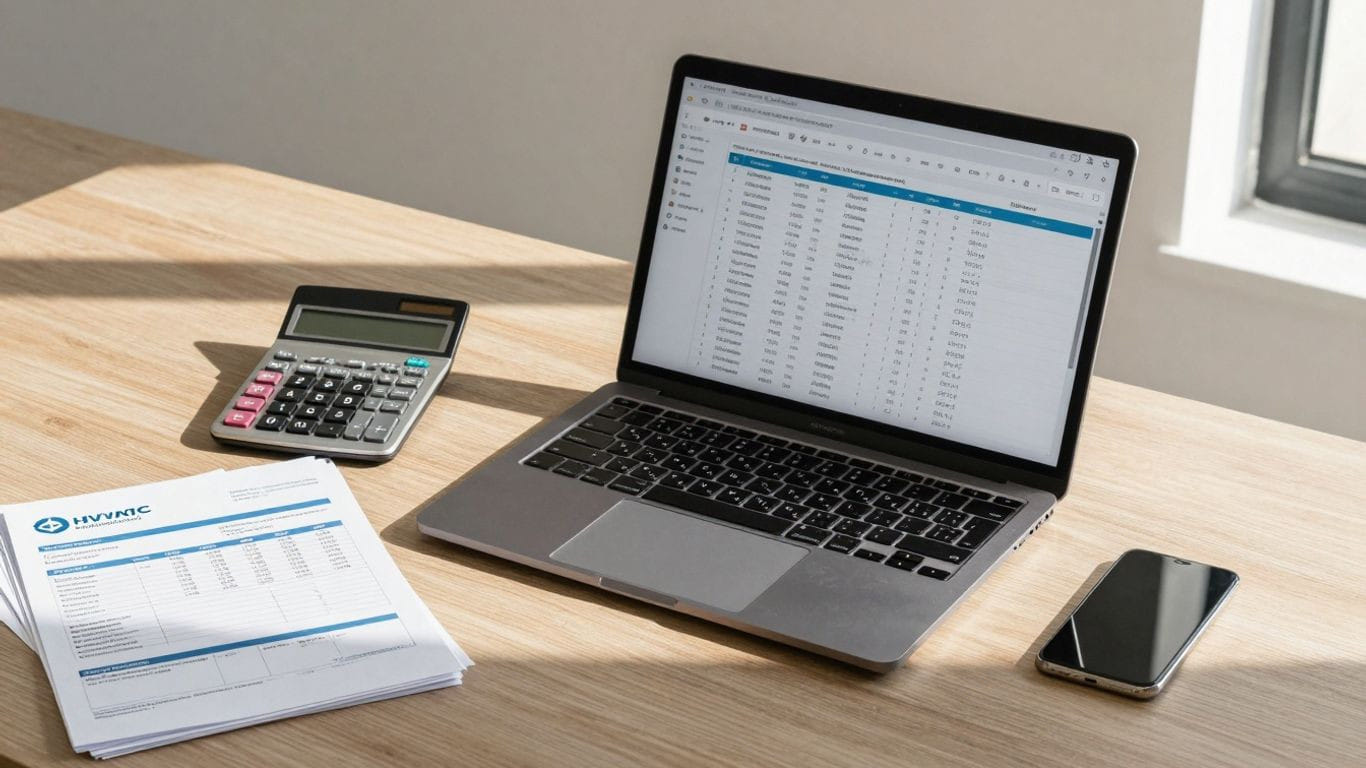
Mastering HVAC Company Bookkeeping: Essential Strategies for Success
Understanding The Unique Financial Landscape Of HVAC Companies
Why HVAC Bookkeeping Is Your Business's Foundation
Think of your bookkeeping as the engine of your HVAC business. Its not just about tracking numbers; its about understanding where your money is coming from and where its going. Without a solid grasp of your finances, you're basically flying blind. You might be busy fixing furnaces and air conditioners all day, but are you actually making a profit? Good bookkeeping gives you that clarity. It helps you see which services are making you the most money and where you might be losing cash. This financial insight is what separates a struggling business from one that's really growing. Its the bedrock for making smart decisions, whether thats about buying new equipment, hiring more techs, or figuring out how to price your jobs so youre not leaving money on the table.
The Unique Financial Challenges Of The HVAC Industry
Lets be real, running an HVAC company isn't like running a coffee shop. There are some specific financial hurdles youve got to jump over. For starters, there's the seasonality. Youre probably slammed in the summer with AC repairs and in the winter with heating emergencies. But what about spring and fall? Those can be slower months, and you still have bills to pay. This means your cash flow can be a bit of a rollercoaster.
Here are some of the big ones:
- Seasonal Ups and Downs: Demand for your services changes a lot depending on the weather. This can make planning your income and expenses tricky.
- High Equipment Costs: You need specialized tools and vehicles, and those don't come cheap. Plus, parts and inventory add up fast.
- Unexpected Repairs: Just like your customers systems, your own equipment can break down, leading to unplanned expenses.
- Complex Job Costs: Every job is different. Youve got labor, parts, travel time, and maybe even subcontractor fees to track for each service call or installation.
Dealing with these financial quirks means you can't just use a generic bookkeeping system. You need something that's built for the realities of the HVAC world, something that can handle the ebb and flow of demand and the specific costs associated with each job.
Why Bookkeeping Is The Thermostat For Your Businesss Success
Your bookkeeping system is kind of like the thermostat in a house. Its constantly checking the temperature (your financial health) and letting you know if things are too hot or too cold. If your profits are dipping, your bookkeeping will show you why. If youre spending too much on parts, the numbers will tell you. It allows you to make adjustments before a small problem becomes a big one. Without it, youre just guessing, and guessing in business usually leads to trouble. Good bookkeeping helps you stay comfortable and in control, ensuring your business runs efficiently year-round, not just during the busy seasons. It helps you plan for the future, like knowing when you can afford to expand or upgrade your fleet, and it makes tax time way less stressful because all your records are in order.
Mastering Core Accounting Concepts For HVAC Success
Alright, let's talk about the nuts and bolts of keeping your HVAC business financially sound. It's not just about knowing how to fix a leaky faucet or a busted AC unit; it's about understanding where your money is actually going and coming from. Think of these accounting concepts as the thermostat for your business they help you control the temperature and keep things running smoothly.
Cash Versus Accrual Accounting For HVAC Businesses
This is a big one, and it's the first decision you'll make about how you track your money. You've got two main paths: cash or accrual accounting. Each one gives you a different view of your business's financial health.
- Cash Accounting: This is pretty straightforward. You record income when you actually get the cash in hand, and you record expenses when you actually pay the bills. It's simple and gives you a clear picture of your current cash flow. If you're a really small operation, this might work.
- Accrual Accounting: This is a bit more involved but usually better for growing HVAC businesses. With accrual, you record income when you've earned it (like when the job is done), even if the customer hasn't paid yet. You record expenses when you've incurred them (like when you receive a parts invoice), even if you haven't paid it yet. This gives you a more accurate look at your business's performance over time, especially if you have long-term contracts or outstanding invoices.
Heres a quick look at the differences:
| Feature | Cash Accounting | Accrual Accounting |
|---|---|---|
| Income Recorded | When cash is received | When revenue is earned (service completed) |
| Expenses Recorded | When cash is paid | When expenses are incurred (bill received) |
| What it Shows | Current cash on hand | Overall financial performance |
| Complexity | Simpler | More complex, but more accurate for business health |
For most HVAC companies, especially those looking to grow, accrual accounting is the way to go. It paints a more realistic picture of your profitability.
The Importance Of Accurate Financial Records
Seriously, don't skimp on this. Accurate records are the bedrock of your entire business. Without them, you're basically flying blind. You won't know which services are actually making you money, where your biggest expenses are, or if you're even pricing your jobs correctly. It's like trying to navigate without a map you might end up somewhere, but probably not where you intended.
Keeping good records isn't just about taxes. It's about making smart decisions. Knowing your numbers helps you figure out if you can afford to hire more techs, buy new equipment, or if you need to adjust your pricing. It's the difference between just surviving and actually thriving.
Laying The Foundation: Core Accounting Concepts For HVAC
Beyond cash versus accrual, there are a few other key ideas you need to get a handle on. These are the building blocks for understanding your financial statements and making informed choices.
- Chart of Accounts: This is basically a list of all the financial accounts your business uses, like income, expenses, assets, and liabilities. It helps you categorize your transactions so you can see where your money is going.
- Profit and Loss (P&L) Statement: Also known as an income statement, this report shows your revenue, expenses, and profit over a specific period (like a month or a year). It tells you if you made money or lost money.
- Balance Sheet: This statement gives you a snapshot of your company's financial position at a specific point in time. It shows what your business owns (assets), what it owes (liabilities), and the owner's equity.
- Job Costing: We'll get into this more later, but it's super important. It means tracking all the costs associated with each individual job labor, materials, overhead. This is how you really know if a specific service or project is profitable.
Getting these concepts down pat will make a huge difference in how you manage your HVAC business. It's not the most exciting part of the job, but it's definitely one of the most important for long-term success.
Essential Strategies For Effective HVAC Company Bookkeeping

Alright, let's talk about the nitty-gritty of keeping your HVAC business's finances in check. This isn't just about ticking boxes; it's about making sure your business actually makes money and stays healthy. Think of these strategies as the tools you need to build a solid financial foundation.
Job Costing: Tracking Every Dollar For Profitability
This is huge. You absolutely need to know how much each job costs you, from the technician's time to the parts used and even a slice of your overhead. Without this, you're just guessing at your profit margins. It helps you see which services are actually making you money and which ones might be costing you.
Heres a simple way to break it down:
- Direct Labor: How many hours did your tech(s) spend on the job, and what's their rate?
- Materials & Parts: Every single screw, wire, or new unit needs to be accounted for.
- Overhead Allocation: A portion of your rent, utilities, insurance, and administrative costs should be assigned to each job.
Knowing your true job costs is like having a secret weapon. It lets you price your services smarter and identify areas where you can cut waste without sacrificing quality.
Inventory Management: Monitoring Parts And Equipment
Ever had a tech drive to a job site only to realize you don't have the right part? That's a costly mistake. Good inventory management means knowing what you have, where it is (on the truck, in the warehouse), and when you need to reorder. This stops you from overspending on parts you don't need or running out of critical items.
- Track Everything: Use a system, whether it's software or a detailed spreadsheet, to log every part that comes in and goes out.
- Regular Audits: Periodically count your stock to make sure your records match reality.
- Set Reorder Points: Know when to order more before you run out completely.
Accounts Receivable: Efficient Invoicing And Payment Collection
Money sitting in unpaid invoices is money you can't use. Getting your invoicing and payment collection process dialed in is key. The faster you invoice, the faster you get paid. Make it easy for customers to pay you, too.
- Invoice Promptly: Send out invoices as soon as the job is done. Don't wait.
- Offer Payment Options: Accept credit cards, online payments, and checks.
- Follow Up: Have a clear process for following up on overdue invoices. A simple reminder call can work wonders.
Payroll Processing: Managing Employee And Contractor Pay
Paying your team accurately and on time is non-negotiable. This includes not just wages but also taxes, benefits, and any other deductions. If you use contractors, make sure you're handling their payments and tax forms correctly. Getting this wrong can lead to big headaches and unhappy employees. This is a critical part of HVAC business management strategies.
- Accurate Time Tracking: Ensure you're paying for all hours worked.
- Tax Compliance: Stay up-to-date with federal, state, and local payroll tax requirements.
- Clear Pay Stubs: Provide employees with easy-to-understand breakdowns of their pay.
Getting these core bookkeeping areas right will make a massive difference in how smoothly your HVAC business runs and how profitable it is.
Leveraging Technology And Professional Support
You didn't get into the HVAC trade to become a spreadsheet wizard, right? The good news is that technology and professional help can handle a lot of the number-crunching, freeing you up to focus on keeping your customers comfortable. Think of it as upgrading your tools to make the job easier and more efficient.
Integrating Bookkeeping Software With Service Tools
These days, your bookkeeping software shouldn't be a standalone thing. It needs to play nice with the other tools you use every day, especially your field service management (FSM) software. When these systems talk to each other, it's like magic. Your technicians can update job details, log parts used, and even send invoices right from their tablets. This information then automatically flows into your accounting system. No more double data entry, which saves a ton of time and cuts down on mistakes. This integration is key to having accurate, up-to-the-minute financial data. It means you can see exactly how much a job cost, how much revenue it brought in, and if it was actually profitable.
Here's a quick look at how it works:
- Scheduling & Dispatch: Your FSM tool handles assigning jobs to technicians.
- On-Site Updates: Technicians record time, materials, and customer notes.
- Automated Invoicing: Invoices are generated based on job data.
- Accounting Sync: All this info feeds directly into your bookkeeping software.
This setup helps you keep a close eye on things like job costing and inventory without breaking a sweat.
The Benefits Of Professional Bookkeeping Services
Sometimes, even with the best software, you just need an expert. Professional bookkeepers, especially those who know the HVAC world, can be a lifesaver. They bring a level of detail and understanding that's hard to get in-house unless you're paying for a full-time accountant. They can spot issues you might miss, make sure you're taking advantage of all available tax deductions, and generally keep your financial house in order. Plus, they're up-to-date on all the latest tax laws and regulations, which means fewer headaches for you.
Working with a professional service means you get consistent, accurate financial records without having to become an accounting expert yourself. They can help you understand your numbers better, so you can make smarter business decisions.
When To Consider Outsourcing Your HVAC Bookkeeping
So, when is it time to hand over the reins? If you're constantly playing catch-up with your books, or if you're worried about making costly errors, it's probably time. Maybe you're missing out on tax savings because you don't have the time to track everything. Or perhaps you just want to spend less time wrestling with invoices and more time on the tools or managing your team. If any of that sounds familiar, looking into outsourced accounting services could be a really smart move for your business. It's not a sign of weakness; it's a sign of smart business growth.
Navigating Common Bookkeeping Challenges In HVAC
Addressing Seasonal Cash Flow Fluctuations
Let's be real, HVAC work isn't exactly steady year-round. Summers are usually crazy busy with AC tune-ups and repairs, while winters can be a bit slower, maybe picking up with heating system emergencies. This up-and-down nature can really mess with your cash flow. One month you're swimming in money, the next you're wondering how you'll cover payroll. The key is to plan ahead.
- Build a Cash Reserve: During your busy season, try to set aside extra cash. Think of it as a rainy day fund, but for the slow season.
- Offer Maintenance Plans: Getting customers to sign up for year-round maintenance contracts can provide a more predictable income stream, even when the weather isn't extreme.
- Adjust Spending: Be mindful of your expenses during slower months. Maybe postpone that big equipment purchase until business picks up.
You can't control the weather, but you can control how you manage your money when the weather changes. Having a solid plan makes those lean months much less stressful.
Overcoming Inventory Management Hurdles
Keeping track of all those parts and pieces from fancy thermostats to basic duct tape can be a headache. If you have too much stuff sitting around, you're tying up cash that could be used elsewhere. But if you don't have a part when a customer needs it, that's lost business and a frustrated client. Its a balancing act.
- Regular Stock Takes: Don't just guess. Schedule time to physically count your inventory regularly.
- Use Software: If you're not already, get a system that tracks inventory. Many service management tools can do this, linking parts used directly to jobs.
- Set Reorder Points: Decide on minimum stock levels for common items. When you hit that number, it's time to order more.
Accurately Integrating Job Costing Into Your Books
This is a big one. You need to know exactly how much each job costs you labor, parts, travel time, everything. Without this, you might be quoting prices that look good but actually lose you money. It takes discipline to track every little expense for every single service call or installation.
- Train Your Technicians: Make sure your team knows how important it is to log their time and any materials they use on the job.
- Categorize Expenses: Clearly define what counts as a direct job cost versus general overhead.
- Review Regularly: Don't just track it; look at the data. See which types of jobs are most profitable and adjust your pricing or focus accordingly.
Driving Growth Through Smart Financial Management
Okay, so you've got your bookkeeping dialed in, your costs are tracked, and your invoices are going out. That's awesome! But what's next? It's time to actually use all that good financial info to make your HVAC company bigger and better. Think of it like tuning up your best truck you want it running at peak performance, right? That's what smart financial management is all about.
Identifying Profitable Services and Optimizing Pricing
Ever wonder which services actually make you the most money? Your bookkeeping is the key to finding out. You need to look at the numbers for each type of job like AC tune-ups, furnace repairs, or new installations. See how much you're spending on parts and labor for each, and then compare that to what you're charging.
- Regularly review your service profitability. Don't just guess. Look at the data.
- Figure out your true costs. This includes everything from the technician's time to the gas in the van and even a bit of overhead.
- Adjust your pricing. If a service is consistently making you great money, maybe you can keep the price steady. If another is barely breaking even, it might be time to bump up the price or find ways to do it cheaper.
Don't be afraid to charge what you're worth. Your customers want reliable service, and that costs money. Being competitive is good, but being unprofitable is a fast track to closing your doors.
Controlling Overhead Costs for Better Margins
Overhead is like that leaky faucet you keep meaning to fix it just keeps dripping money away. These are the costs that aren't tied to a specific job, like your office rent, insurance, or those company cell phones. Even small savings here add up big time.
Here are some areas to check:
- Office Supplies: Are you buying in bulk? Are people using supplies wisely?
- Vehicle Fleet: Regular maintenance can prevent costly breakdowns. Are your routes efficient to save on gas?
- Software Subscriptions: Do you really use all those tools you're paying for every month?
- Utilities: Simple things like turning off lights or adjusting thermostats when the office is empty can make a difference.
Tracking Key Performance Indicators for Real-Time Insights
Numbers are great, but you need to know which numbers matter most. These are your Key Performance Indicators, or KPIs. They give you a quick snapshot of how your business is doing right now.
Some important ones for HVAC companies include:
- Gross Profit Margin: This shows how much money you have left after paying for the direct costs of a job.
- Customer Acquisition Cost (CAC): How much does it cost you to get a new customer?
- Average Revenue Per Customer: How much does each customer spend with you over time?
- First-Time Fix Rate: How often do your technicians solve a problem on the first visit?
Keeping an eye on these KPIs helps you spot problems early and celebrate wins quickly. You can use your bookkeeping software to track these, or even set up a simple spreadsheet.
Budgeting and Forecasting for Financial Stability
Budgeting isn't just for big corporations. It's your financial roadmap. You need to plan where your money is going to go, especially considering how seasonal HVAC work can be.
- Create a realistic budget: Base it on your past performance and future goals. Don't just pull numbers out of thin air.
- Forecast for different scenarios: What happens if you have a really slow summer? Or a super busy winter? Plan for the good and the not-so-good.
- Review and update regularly: Your budget isn't set in stone. Life happens, and your budget should adapt. Check in monthly or quarterly to see if you're on track and make changes as needed.
By actively managing these areas, you're not just running an HVAC company; you're building a financially strong and growing business.
Schedule a consultation to see how Proven can help your business thrive.
Let’s discuss Proven’s streamlined back-office solutions and strategic executive leadership.